
Close the main shut-off valve if the source is a supply line, a water heater or an appliance hose. If water has reached outlets or cords, keep out of the room until the breaker for that circuit is off.
Service category · Queen Creek, AZ
Water Extraction and Drying in Queen Creek, AZ
Water is standing on your tile, squishing out of the carpet, or darkening the bottom of a wall. Water extraction pulls that standing water out of your Queen Creek home, and structural drying then takes the moisture out of pad, drywall, wood and concrete. Shut off the main valve if the leak is still running, then call before the water soaks past the surface.
What you are seeing
Where the water sits decides what you lose first
Standing water on tile or vinyl spreads under baseboards and into the drywall along every wall it touches. Water in carpet runs down into the pad, and the pad holds it against the tack strip and the slab.
- Puddles on hard floors
Water slips under baseboards and cabinet toe-kicks, where it wets wall bottoms out of sight.
- Soaked carpet
The pad holds far more water than the surface shows and keeps the concrete beneath it wet.
- Stains overhead
A brown ring on the ceiling means water is pooling on top of the drywall, and the panel can sag and drop.
- Damp concrete
A slab that stays dark after the surface water is gone still holds moisture under your flooring.
Choose your situation
Choose the situation that matches yours
- Emergency Water RemovalWater pooled across the floor and still spreading: shut off the main and call for emergency removal before it reaches the walls.
- Structural Drying and DehumidificationWater gone but walls, framing or floors still damp: structural drying pulls the moisture out of what soaked it up.
- Wet Carpet and Flooring DryingSquishing carpet, rising laminate seams or lifting vinyl: dry the pad and the floor under it before the covering is lost.
- Ceiling and Wall Water DamageCeiling stains, sagging drywall or bubbling paint: water is sitting above or behind the panel, and the stain shows only part of it.
- Hardwood Floor Water DamageCupping edges, darkened seams or soft spots in a wood floor: the water is under the boards, and drying decides what stays.
- Drywall and Insulation Water DamageSoft wall bottoms, pulled-away baseboards or soaked batts: wet gypsum and insulation hold water against the studs.
- Concrete Slab and Subfloor DryingDark concrete, soft subfloor panels or loose tile: the layer under your flooring holds water longest and needs its own drying.
Safety protocol
Shut off, switch off, stay clear
A ceiling that bulges or drips from the center can come down, so keep everyone out of the room beneath it. Water that is dark, smells foul or came from outside counts as contaminated: keep children and pets away from it.
Loss risk
What sitting water does to your home
Every hour water sits, it moves from the surface into materials that hold it. Gypsum wicks it up the wall, particleboard swells, and wood framing absorbs it slowly and gives it back even more slowly.
- Drywall
Wet gypsum softens at the base and loses its strength, so a wall you could dry in place turns into a cut-out.
- Cabinet bases
Particleboard toe-kicks absorb water from the floor and split along their edges.
- Clean water
Supply-line water picks up dirt from flooring and dust as it spreads and turns unsanitary the longer it sits.
Shut off the source and keep clear of wet circuits, then call while most of the water is still on the surface.
(480) 933-8373Triage order
Extraction and drying are two different jobs
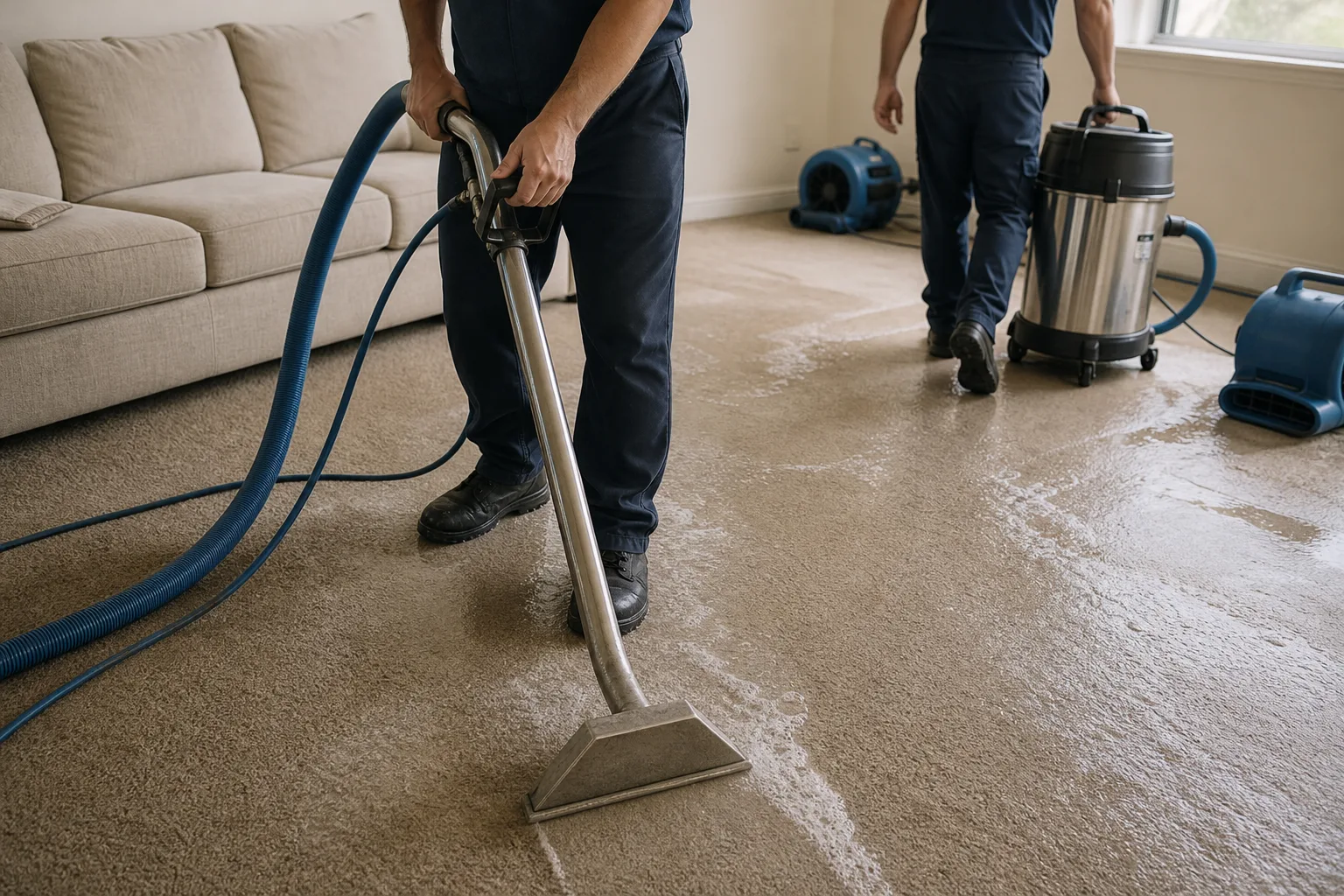
Extraction removes the liquid: standing water on floors, water held in carpet and pad, and water pooled on the surface of the slab. Drying removes the moisture that soaked in, the part you cannot see, from wall cavities, framing, subfloor and concrete.
Skipping the second step leaves a floor that looks dry over a structure that is still wet. Trapped moisture keeps swelling trim, loosens tile and feeds odor until the materials reach a dry reading.
Local detail
Monsoon runoff across the threshold
Storm water that crosses a door threshold soaks the carpet and the base of every wall it reaches, and on a slab floor it travels under the flooring. Arizona's monsoon season runs from June 15 through September 30 by the National Weather Service's count, so photograph where the water came in and call about the wet materials, not only the puddle.
Restoration scope
What professional extraction and drying cover
Professional water extraction and drying treat the whole wet area, measured from the readings, not from the stain.
- Industrial extraction
Extraction pulls standing water off hard floors and draws water out of carpet and pad.
- Thermal moisture mapping
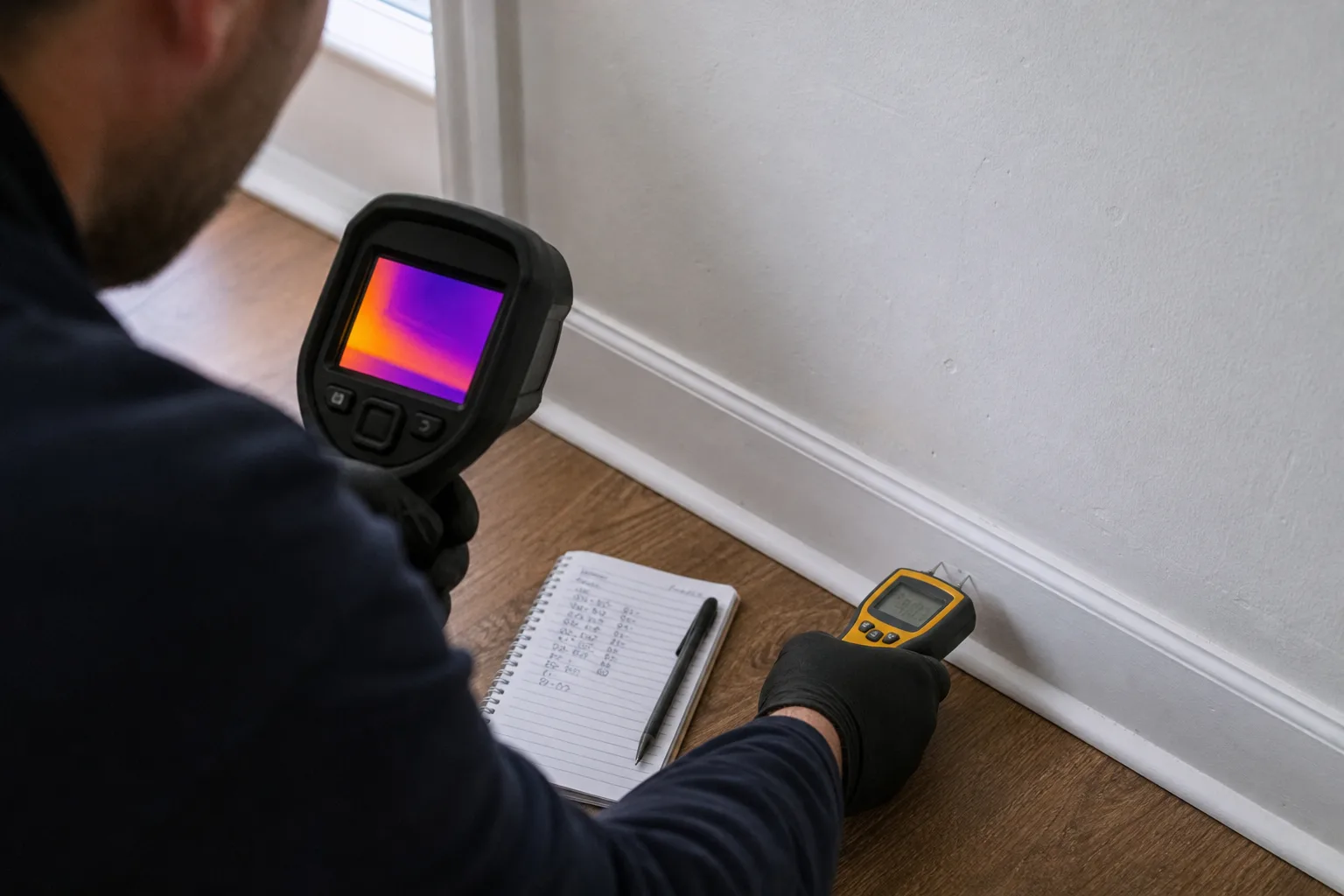
Readings across floors, walls and cabinets trace where the water traveled beyond what you can see.
- Controlled removal
Wet pad, swollen trim and the bottom of soaked drywall come out where they cannot dry, so the structure behind them can.
- Structural drying
High-capacity dehumidification and directed airflow pull moisture out of wall cavities, framing and concrete.
- Drying-goal verification
Each wet material has to match a dry reference reading before the job closes.
Triage order
Why the call you make now decides the scope
Liquid water comes out of a room far more easily than moisture that has already soaked into wood, gypsum and concrete. The longer it sits, the more of your flooring and drywall moves from drying in place to cutting out.
Shut off the source, photograph the wet rooms and call from Queen Creek or anywhere in Maricopa County while most of the water is still on the surface, because extraction at that stage keeps the most of your home.
Scope: Emergency extraction and structural drying clearance only. Structural rebuild and finishing carpentry are contracted separately.
Service area
Queen Creek ZIP codes
- 85142
Every responding technician is independent. Before work begins, confirm the technician's license, insurance and pricing with them directly.
Common questions
Water extraction and drying questions in Queen Creek
How do you know when a wet room is actually dry?
Moisture readings decide it, not touch. Each wet wall, floor and cabinet has to match a reading from a dry room in your home before drying ends.
Can wet carpet stay in place?
Sometimes the carpet itself can, after extraction and drying, but a soaked pad usually comes out because it holds water against the slab. The readings and the water source decide.
Should you wait for the floor to look dry before calling?
No. A surface that looks dry can sit over wet pad, wet wall bottoms and a damp slab, and that hidden moisture keeps swelling trim and loosening flooring.
Water damage keeps spreading until it is dried.
Call from Queen Creek before the water reaches the next room, the subfloor or the framing behind your walls.