
Every hour water stays in the gypsum, the wet line climbs and the cut line climbs with it. Wet insulation left in a closed wall keeps the studs wet long after the room looks dry.
Service · Queen Creek, AZ
Drywall and Insulation Water Damage in Queen Creek, AZ
The bottom of your drywall is soft, the baseboard has pulled away, or wet insulation is hanging behind a damaged wall. Drywall and insulation water damage spreads inside the wall cavity in your Queen Creek home, where wet gypsum and batts hold water against the studs. Call before the soft section climbs higher and more of the wall has to come out.
What you are seeing
Soft wall bottoms and baseboards pulling away
Water from a flooded floor, a leak inside the wall or a failed garage water heater soaks the gypsum from the bottom edge or from inside. The paint may look normal while the core behind it turns to paste.
- Soft base
Drywall that gives near the floor has lost its core strength.
- Swollen trim
Baseboards that pull away or split mark water inside the wall.
- Wicking line
A darker band rising up the wall shows how high the gypsum has drawn water.
- Wet batts
Insulation behind a broken section sags and drips.
Loss risk
What wet gypsum and insulation do to a wall
Gypsum wicks water upward and loses its strength as it soaks, so the wet line keeps rising after the floor clears. Insulation holds that water against the studs and the back of the drywall, and it does not dry on its own inside a closed wall.
- Gypsum core
Wet core crumbles, and the paper face separates from it.
- Fiberglass batts
Water collapses the batts, and they stop insulating the wall.
- Cellulose
Blown cellulose in your walls absorbs water, packs down and holds it against the framing.
- Studs and plates
Framing pressed against wet insulation stays wet the longest.
Restoration scope
What drywall and insulation work covers
Wall work starts by sorting what can dry in place from what has to go, by readings rather than guesses.
- Wicking-height readings
Readings up the wall find where the wet line ends.
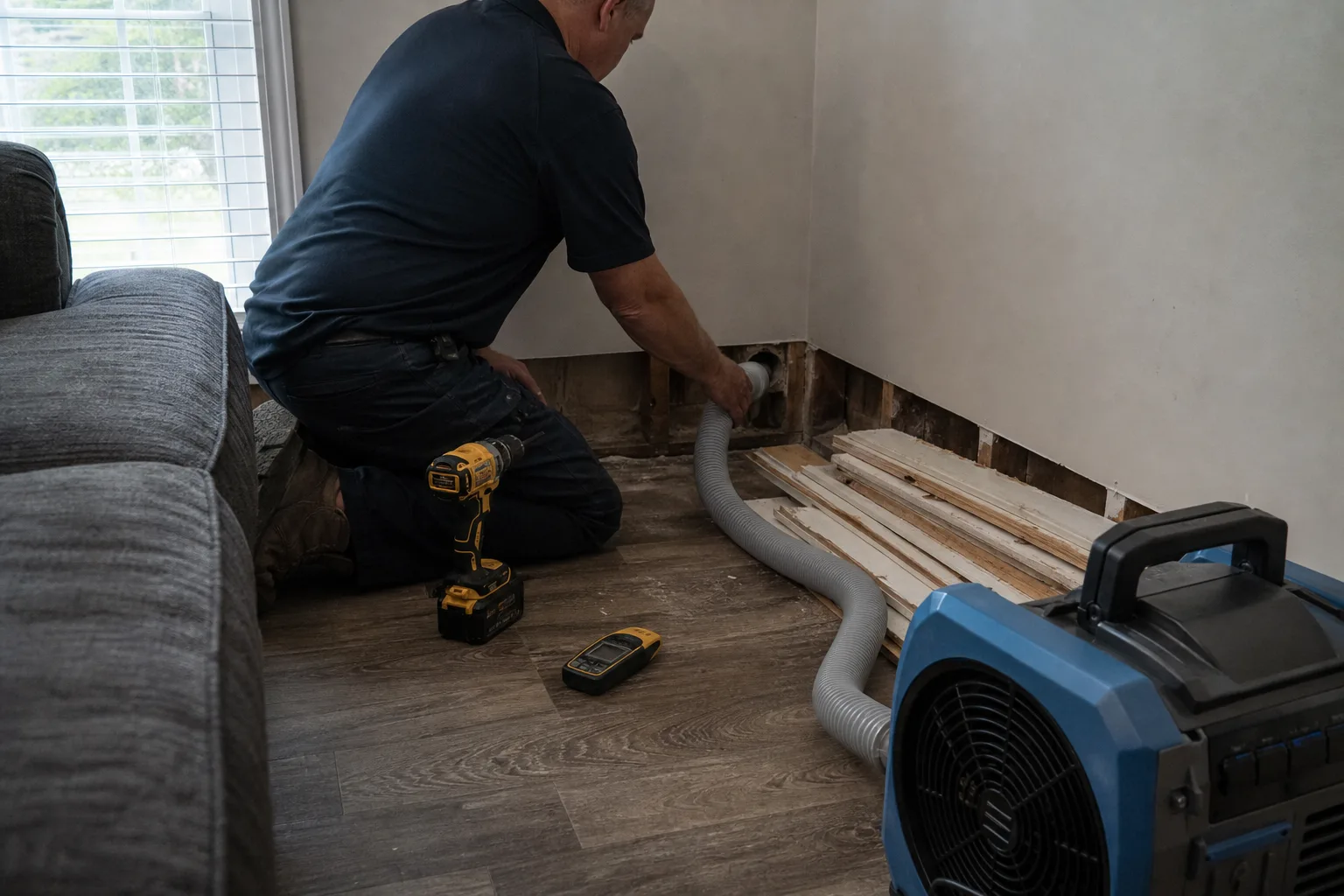
- Flood cuts
Drywall below that line comes out along a clean, level cut, so the wall above it stays.
- Batt and cellulose pull-out
Soaked insulation leaves the wall, since it keeps the studs damp.
- Open-bay drying
With the lower wall open, airflow hits the studs and sole plate directly.
Keep power off on the wet wall's circuit and call before the wicking line climbs any higher.
(480) 933-8373Local detail
The wall your garage shares with the house
A water heater leak in a garage soaks the base of the wall your garage shares with the house, and the water reaches the cavity behind the living side. Readings on both faces of that wall show how far it went in your Queen Creek home.
Service sequence
How a wet wall moves to dry framing
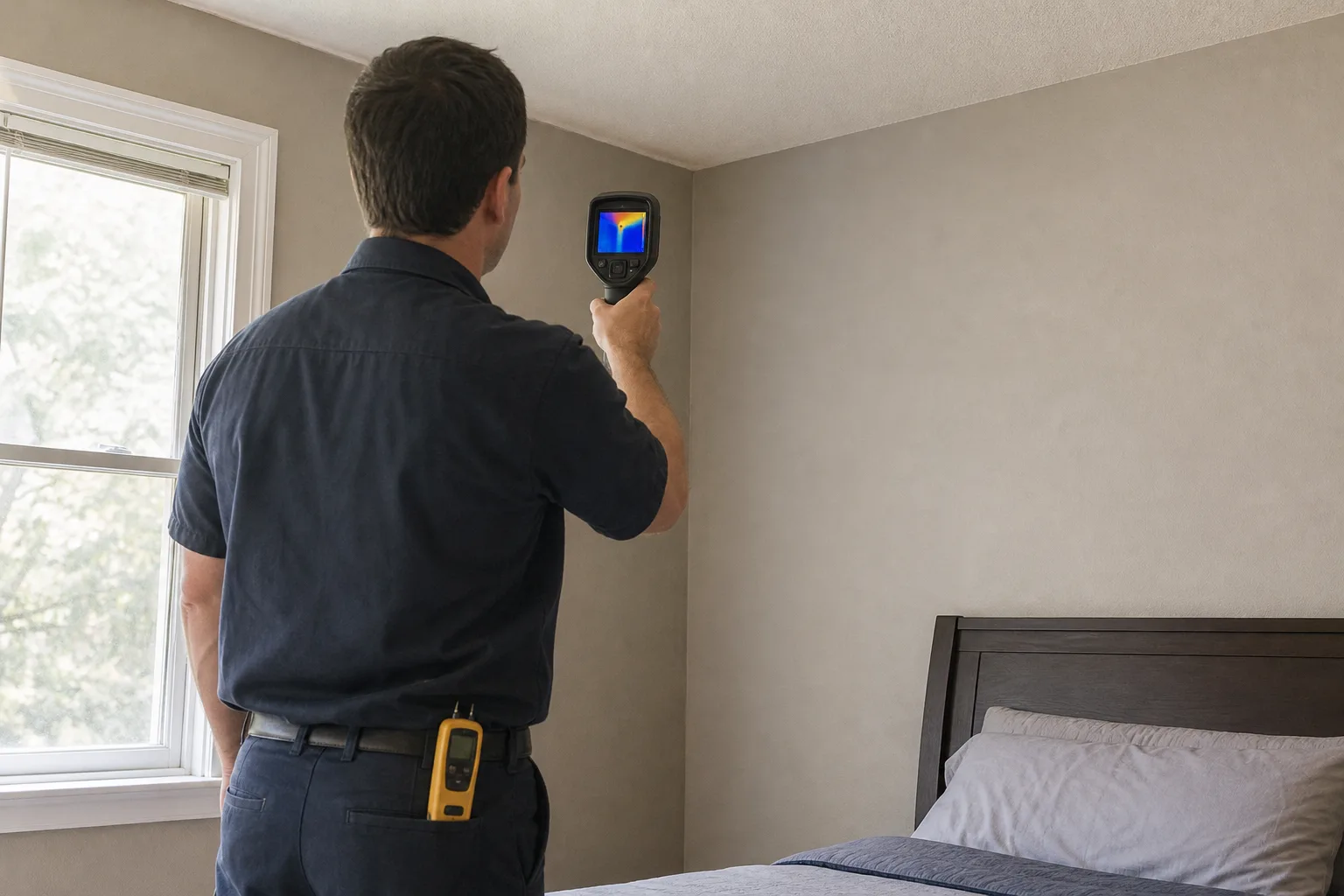
Readings up the wall
Moisture readings set how high the wet section runs.
Cut line
The cut sits above the wet line, level across the wall.
Removal
Wet drywall and insulation below the line come out of the wall.
Cavity drying
The open cavity dries until the studs and plates reach their goal.
Closing readings
Final framing readings decide when the wall is ready to close.
Property type
Showers, vanities, closets and garages
Wall damage hides in different places depending on the room, and each one changes what you see from the outside.
- Tub and shower walls
A dripping valve or a failed grout line soaks the drywall behind your tile surround, out of sight.
- Vanity walls
A weeping connection behind your vanity wets the gypsum there first.
- Closets
Hanging clothes and shelving conceal a soaked section well after the leak.
- Garage walls
Thick fire-rated drywall soaks up extra water and dries slowest of all.
Triage order
The wet line decides how much wall you keep
Call about the wet drywall and insulation in your home, across Queen Creek and Maricopa County, while the cut can stay low on the wall.
Scope: Emergency extraction and structural drying clearance only. Structural rebuild and finishing carpentry are contracted separately.
Service area
Queen Creek ZIP codes
- 85142
Every responding technician is independent. Before work begins, confirm the technician's license, insurance and pricing with them directly.
Common questions
Drywall and insulation questions from Queen Creek
Can wet drywall dry in place?
Sometimes, when clean water touched it briefly and drying reaches the cavity early. Drywall that has gone soft, crumbled or swollen has lost its strength and comes out.
Why does wet insulation have to come out?
Wet batts collapse and stop insulating, and both batts and cellulose hold water against the studs. Inside a closed wall they stay wet and keep the framing wet with them.
How high does a flood cut go?
Readings decide it: the cut sits above the highest wet point on the wall, so the drywall above it can stay.
Does normal-looking paint mean the wall is dry?
No. The paint and paper face can look fine while the gypsum core behind them is wet and soft.
Water damage keeps spreading until it is dried.
Call from Queen Creek before the water reaches the next room, the subfloor or the framing behind your walls.