
Photograph your cupped boards, the darkened seams and the source before anything comes off the floor, so you keep a record of the damage. Add a photo of the waterline on your furniture legs, then list what sat on the wet section.
Service · Queen Creek, AZ
Hardwood Floor Water Damage in Queen Creek, AZ
Your hardwood boards are rising at the edges, the seams have darkened, or a stretch of floor feels soft or hollow underfoot. Hardwood floor water damage starts underneath, where water soaks the bottom of the boards and the layer below them in your Queen Creek home. Call while the boards can still dry and settle flat.
What you are seeing
Boards that cup, crown or darken at the seams
Water from your dishwasher, a leaking sink line or storm water at a door runs into the seams and under the boards. Wood shows it slowly, so your floor can look fine at first and then start to move.
- Cupping
The board edges sit higher than the center because the underside holds more water than the top.
- Crowning
The center rises above the edges, often after the top dries ahead of the bottom.
- Dark seams
Water stains the edges where it entered between boards.
- Hollow or soft spots
A board that gives or sounds hollow has lost its bond to the floor below.
Loss risk
What water does to a wood floor
Wood takes water in through its underside and edges and swells across its width. Boards packed tight against each other have nowhere to go, so they cup, buckle and pull fasteners or glue loose.
- Board swelling
Each of your boards widens as it absorbs water and presses against its neighbors.
- Buckling
Swelling at the walls can lift whole rows off the floor.
- Adhesive failure
Glued-down wood over a slab loses its bond as water reaches the adhesive.
- Finish damage
The surface finish clouds and the stain darkens where water sat.
Restoration scope
What hardwood floor drying covers
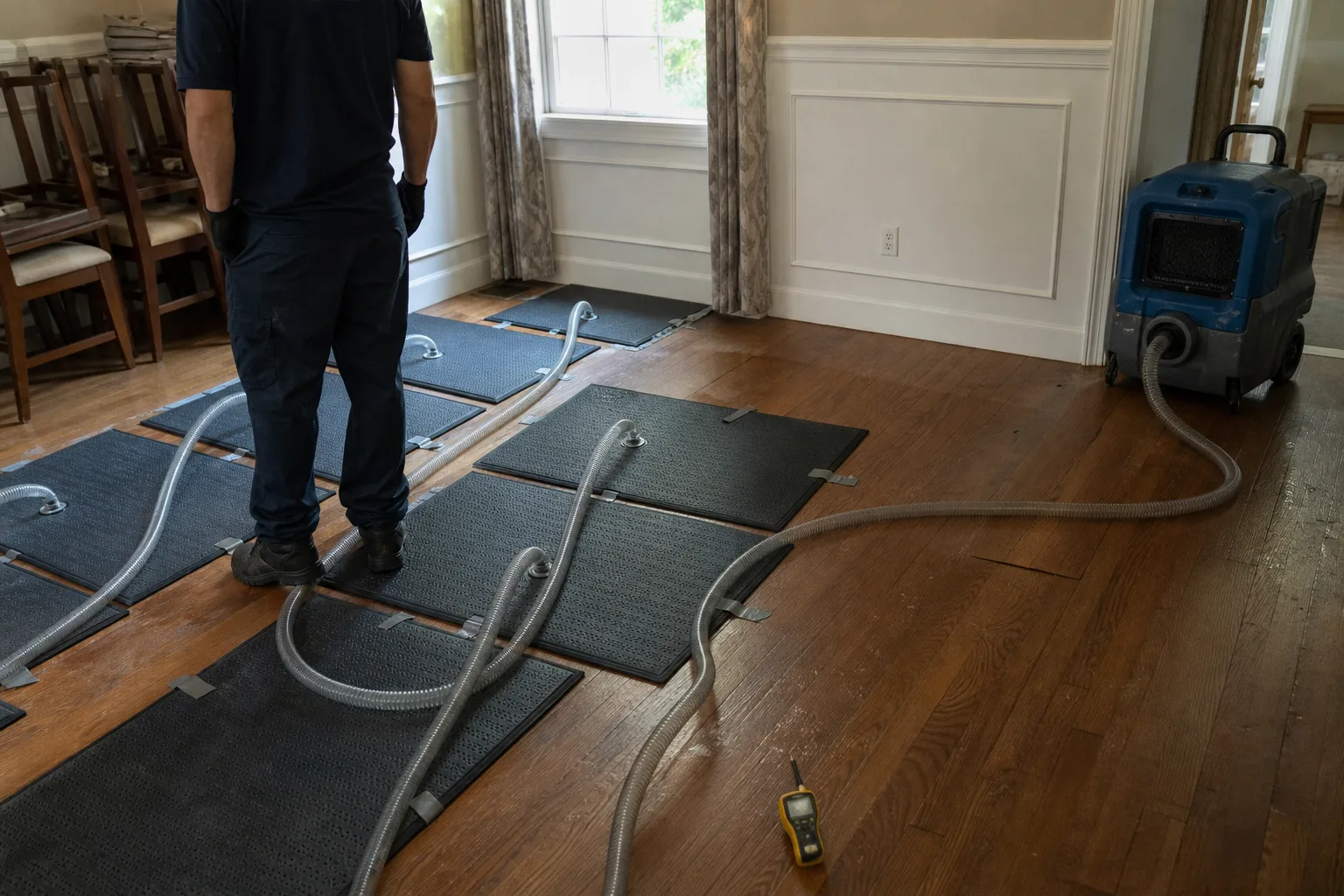
Professional drying works on the wood itself, not only the room around your floor, because the boards hold the water you need out.
- Gap extraction
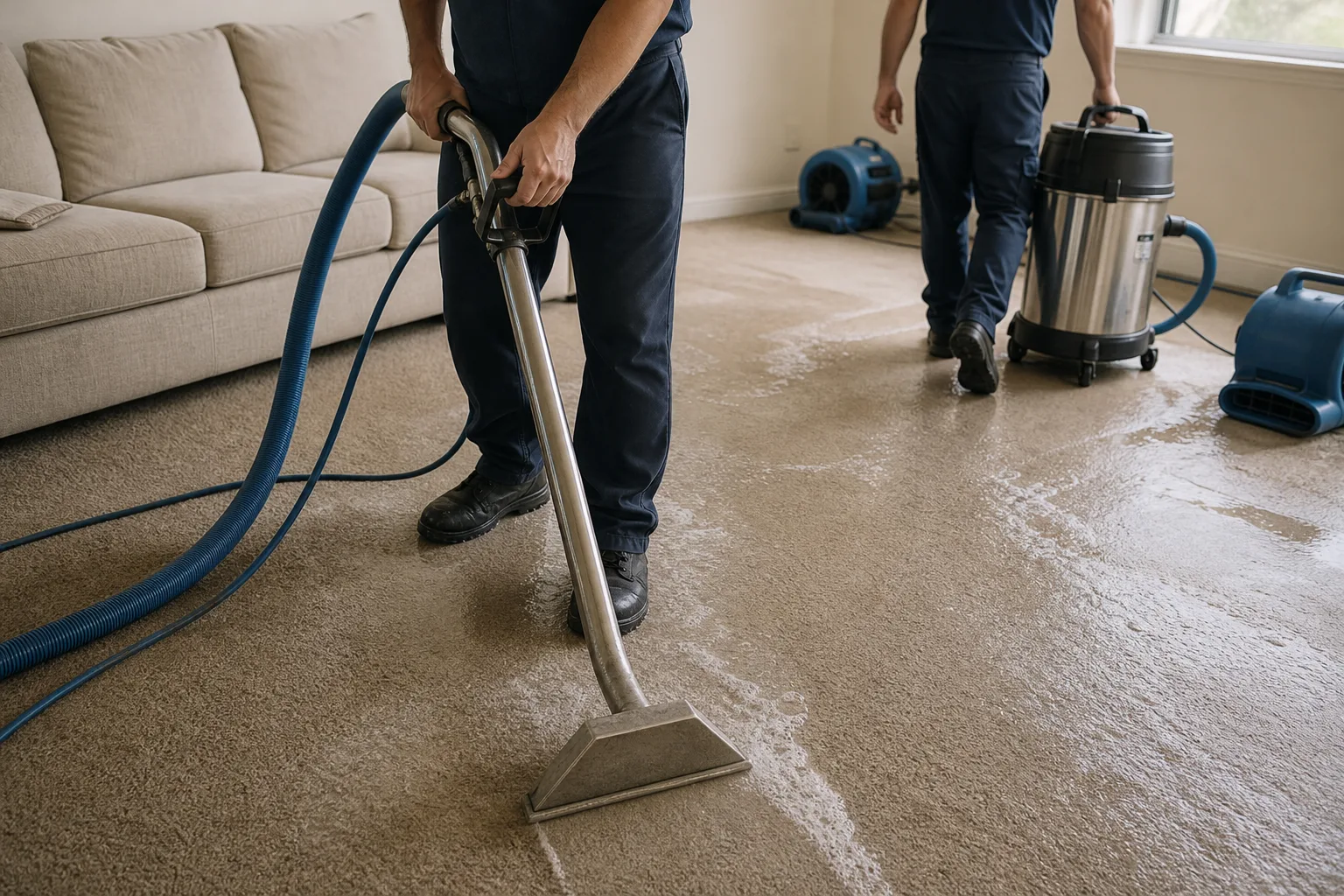
Extraction draws water out of the gaps and off the face of the boards.
- Sealed floor drying
Drying sealed to the floor surface pulls moisture up and out through the wood.
- Reference readings
Readings from an unaffected board in your same floor set the dry goal.
- Board removal
Boards that split or buckle past recovery come up so the layer beneath can dry.
Keep heavy furniture and foot traffic off the cupped boards, then call while they can still dry flat.
(480) 933-8373Local detail
Glued-down wood on a slab floor
In a slab-on-grade home in Maricopa County, wood flooring sits glued or floated over concrete, so water trapped under the boards has no way out except up through the wood. Drying in a Queen Creek home has to reach the slab under the floor as well as the boards on it.
Service sequence
How wood floor drying runs
Water off the surface
Extraction clears the seams and the face of the floor.
Baseline
Readings from dry boards elsewhere in your home set the goal.
Drying in place
Sealed drying and dehumidification work through the boards and the layer under them.
Monitoring
Readings track each wet section until it matches the baseline.
Settling
Boards that dry evenly can flatten as their moisture levels out, and the readings show which ones will.
Documentation
Photograph the floor before anything moves
Triage order
Cupped boards can still flatten; buckled rows rarely do
Cupping is the early stage: your boards hold water underneath and can often dry flat. Once rows buckle or split, the floor has passed the point where drying alone keeps it.
Call about the water under your hardwood while drying can still save the boards.
Scope: Emergency extraction and structural drying clearance only. Structural rebuild and finishing carpentry are contracted separately.
Service area
Queen Creek ZIP codes
- 85142
Every responding technician is independent. Before work begins, confirm the technician's license, insurance and pricing with them directly.
Common questions
Hardwood floor water damage questions from Queen Creek
Can cupped hardwood go back to flat?
Often, when drying starts while the boards are only cupped. Boards that dry evenly from below can settle back; buckled or split boards usually cannot.
Why did the floor cup well after the leak?
Wood absorbs water slowly through its underside, so the swelling shows after the surface water is gone. The water under the boards is still there.
Does engineered wood react the same way?
Engineered boards carry a thin wood layer over a plywood core, and that core can swell and separate in water. Readings show whether the boards can dry or have to come up.
Should you wait for the boards to flatten?
No. Water left under the boards keeps swelling them and weakens the glue and fasteners, and cupping can turn into buckling.
Water damage keeps spreading until it is dried.
Call from Queen Creek before the water reaches the next room, the subfloor or the framing behind your walls.